
Outcomes from the Activity 1.1
The agricultural extension systems in Nigeria and Senegal play a critical role in brokering critical knowledge and practices that supports locally led climate adaptation, supporting the enhancing agricultural productivity. The identified key actors in Nigeria and Senegal are important in the successful implementation the SCALE project in both countries. These actors include farmers, extension agents, research institutions, and private and non-governmental organizations (NGOs). In Nigeria, the Ministry of Agriculture and Food Security, Ministry of Livestock Development, while in Senegal, the Ministry of Agriculture, Rural Equipment and Food Sovereignty in both countries, are the key government institutions responsible for supporting the growth of the agricultural sector, coordinating the implementation of policies of the government. Findings from the review of the role and linkages of the actors in the extension system in both countries show that systems are often characterized by weak linkages between these actors, which hinders the efficient dissemination of agricultural innovations. In Nigeria, the Research-Extension-Farmer Input Linkage System (REFILS) focuses on improving collaboration between researchers, extension agents, and farmers. Very noticeable was the low number of women involved as extension agents. However, challenges such as poor funding, inadequate training, and weak farmer organizations have limited its effectiveness. Similarly, a case study of private extension services in Ogun State, Nigeria, highlights that private organizations tend to have stronger linkages with farmers and provide better market access, but face challenges in sustaining trust and collaboration across value chains. In Senegal, agricultural cooperatives and extension workers play a significant role in linking farmers to innovation systems. Studies show that while cooperatives often spread innovations through hierarchical structures, these processes are controlled by key leaders, limiting equitable access to knowledge among members. Furthermore, agricultural extension agents in Senegal require additional training in communication for development to improve their effectiveness in facilitating agricultural innovations. It was also noticed that most extension of knowledge brokering in the extension system in Senegal are carried out by non-governmental organizations supporting climate adaptation practices among the rural farmers. The list of stakeholders identified during the identification of stakeholders are found in annex I.
Outcomes from the Activity 1.2: Capacity needs assessment of the key actors
Findings Nigeria
The following findings highlights distinct capacity needs for extension agents, farmers, and researchers, alongside their respective challenges with climate finance and the influence of gender.
Extension Agents:
Farmers:
Researchers:
All three stakeholder groups (extension agents, farmers, and researchers) need significant capacity-building efforts, especially in climate finance literacy, digital tool utilization, and gender equity measures, to enhance their climate adaptation efforts.
Findings Senegal
Extension Agents:
Farmers:
Researchers:
From the analysis, each group faces distinct capacity and financial needs, with gender disparities evident across all categories.
Outcomes from the Activity 1.3: Documentation of Proven Knowledge and Technologies in Senegal and Nigeria
Literature review findings
Key findings from 48 reviewed grey literature from researchers in Africa on climate adaptation among smallholder farmers in Africa highlights several key proven knowledge and technologies that are critical for locally led adaptation. Information on the knowledge and technologies received from the grey literature will be subjected to considerations for trials and adoption based on need during the validation exercises that will be conducted in the two countries. During the validation exercises, efforts will be made to identify how the chosen and proven knowledge and technologies support GESI in smallholder farming communities.
On the key findings, first, the adoption of drought-resistant crops stands out as a widely reported and effective strategy. Studies indicate that the use of these crop varieties helps farmers cope with reduced rainfall and prolonged droughts, significantly enhancing their resilience to climate variability (Komba & Muchapondwa, 2012; Gbegbelegbe et al., 2018; Atube et al., 2021). Second, improved irrigation systems are vital for ensuring water availability during dry periods. The implementation of irrigation techniques enables smallholder farmers to maintain crop yields and reduce the risk of crop failure, thereby securing their livelihoods in the face of erratic rainfall patterns (Gandure et al., 2013; Makate et al., 2019; Mutekwa, 2009). Third, soil conservation techniques, including mulching, zero tillage, and agroforestry, are crucial for maintaining soil fertility and moisture. These practices not only improve soil health but also enhance crop productivity and sustainability, providing a stable agricultural foundation for smallholder farmers (Ubisi et al., 2017; Aniah et al., 2019; Rusinga et al., 2014).
Findings from Surveys, Key Informant Interviews and Focus Group Discussions
Findings of key climate adaptation Knowledge, Practices, and Actions by Stakeholder Groups in Nigeria
Extension agents observed several farmer-led climate adaptation practices. These include agroforestry, crop rotation, cover cropping, early planting of resistant cocoyam varieties, and using neem-based insecticides. The Extension agents noted challenges like lack of documentation for these local practices, inconsistent adoption, and limited knowledge on climate change impacts. Capacity-building needs include training in the documentation of local practices and the use of digital tools to improve service delivery. Digital tools can be effectively used for knowledge and information sharing between the extension agents and local farmers. One platform that has been popular on this is the e-extension applications where text messages, videos, and audio messages are used to disseminate agricultural extension information to local farmers and communities. The tools have also helped in reaching local people in remote places where road access is not good. Gender representation in this group is balanced, with 50% male and 50% female participants, showing equitable participation in knowledge sharing and skill-building efforts. Farmers employ diverse adaptation practices rooted in local knowledge to cope with climate variability. Methods include mixed cropping, agroforestry, and use of local seed varieties that are resilient to changing conditions. Water management techniques, such as rainwater harvesting and sandbag barriers, were commonly applied. Gender-specific differences were noted, with 32 farmers (16 men, 16 women) participating.
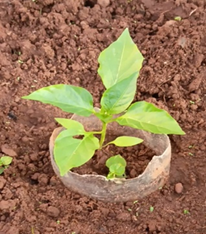
Women, often engaged in vegetable and pepper farming, reported frequent crop failures and reduced yields due to unpredictable weather patterns. During the engagement with farmers, some reported unique practices they have adopted to adapt to climate change. A farmer located under his poultry house under the trees as an adaption strategy in Southeast Nigeria as seen in the video link: https://drive.google.com/file/d/1dItfSumtR7CVA1SOAUPd2z2qta9FPGX0/view?usp=drive_link. Some women in Nsukka community working with researchers from the University of Nigeria, Nsukka found a solution to stem cutting ants. These stem cutting ants attack the newly transplanted pepper and tomatoe plants and cut the stems. The menace of these stem cutting ants has been excerbarated due to high temperatures and other climatic factors. The co-created solution involves the use of plastic bottled water or soda drink waste bottles to protect the young transplanted plant, effectively protecting it from stem cutting ants. The ants are unable to crawl through the slippery bottles. Figure 1 shows the co-created solution by the women and researchers.
The Knowledge gaps remain due to limited extension support on climate-specific practices and funding for adaptation, with many women relying on informal networks such as friends and neighbours and co-farmers for advice. Other extension methods such as radios and televisions are usually not very popular as they are affected by other factors such as power outages, lack of trust and practicality and lack of contextualization of needs which the extension agents usually provide. Researchers’ focus areas include climate impacts on crop health, supply chains, and local food security, with particular emphasis on traditional adaptive practices such as intercropping and organic inputs. Collaborating with farmers and extension agents, researchers face funding constraints and limited infrastructure for outreach. Of the 12 researchers interviewed (6 men and 6 women), all self-fund their research, and 75% of women hold PhDs, highlighting a strong female representation in advanced research roles. Researchers recommend creating platforms for continuous dialogue and utilizing participatory research to enhance trust and adaptation receptiveness among farmers.
Findings of key climate adaptation Knowledge, Practices, and Actions by Stakeholder Groups in Senegal
Extension agents, primarily male (92%), the extension agents, with an average age of 35, focus on agricultural adaptation in Senegal’s Saint-Louis region. Their work emphasizes crop diversification, organic fertilization, rice intensification, and mulching. Major barriers they encounter include limited access to water, organic material, and suitable seeds, as well as the financial strain of irrigation costs. Agents also noted challenges in communicating practices due to farmers’ limited internet access and language barriers. Capacity-building priorities for agents include training on drip irrigation and climate change adaptation techniques. Agents recommend expanding the use of organic fertilizers and implementing agroecological techniques like crop rotation, dikes, and hedges. Farmers face climate impacts such as crop failure due to diseases, drought, and pest infestations. In response, they apply local adaptation strategies like crop rotation, organic fertilization, rice intensification, and mulching. Farm sizes vary by gender, with men holding an average of 1.93 hectares compared to 0.23 and 0.37 hectares for women and youth, respectively. Knowledge dissemination varies; 77% of men, 72% of women, and 37% of youth actively share knowledge, often through field schools and peer exchanges. To overcome challenges like lack of access to land, financing, and pesticides, farmers recommend increasing support for practical training in local languages and networking for collaboration. Researchers, mostly male (83%), focus on sustainable agriculture and agroecology, with an average of 12 years of experience. Their work centers on developing resilient crop varieties, land management, and practices like agroforestry and rice intensification to enhance climate adaptation. Key barriers include limited funding and infrastructure, high technology costs, and the gap between developed technologies and farmers’ needs. Researchers advocate for stronger partnerships with farmers and extension agents and emphasize knowledge-sharing via workshops and field demonstrations. They recommend creating dedicated platforms for information dissemination in local languages to facilitate effective collaboration and local adaptation integration. These findings will be validated and disaggregated during the proposed validation workshops and co-design and co-development of interventions.
Next Steps
The next steps focus on work package 2 which involves co-designing and implementation of targeted technical support and capacity-strengthening interventions in the areas of need. The following three activities will be implemented:
Customized technical support that will involve field visit and practical assistance.